
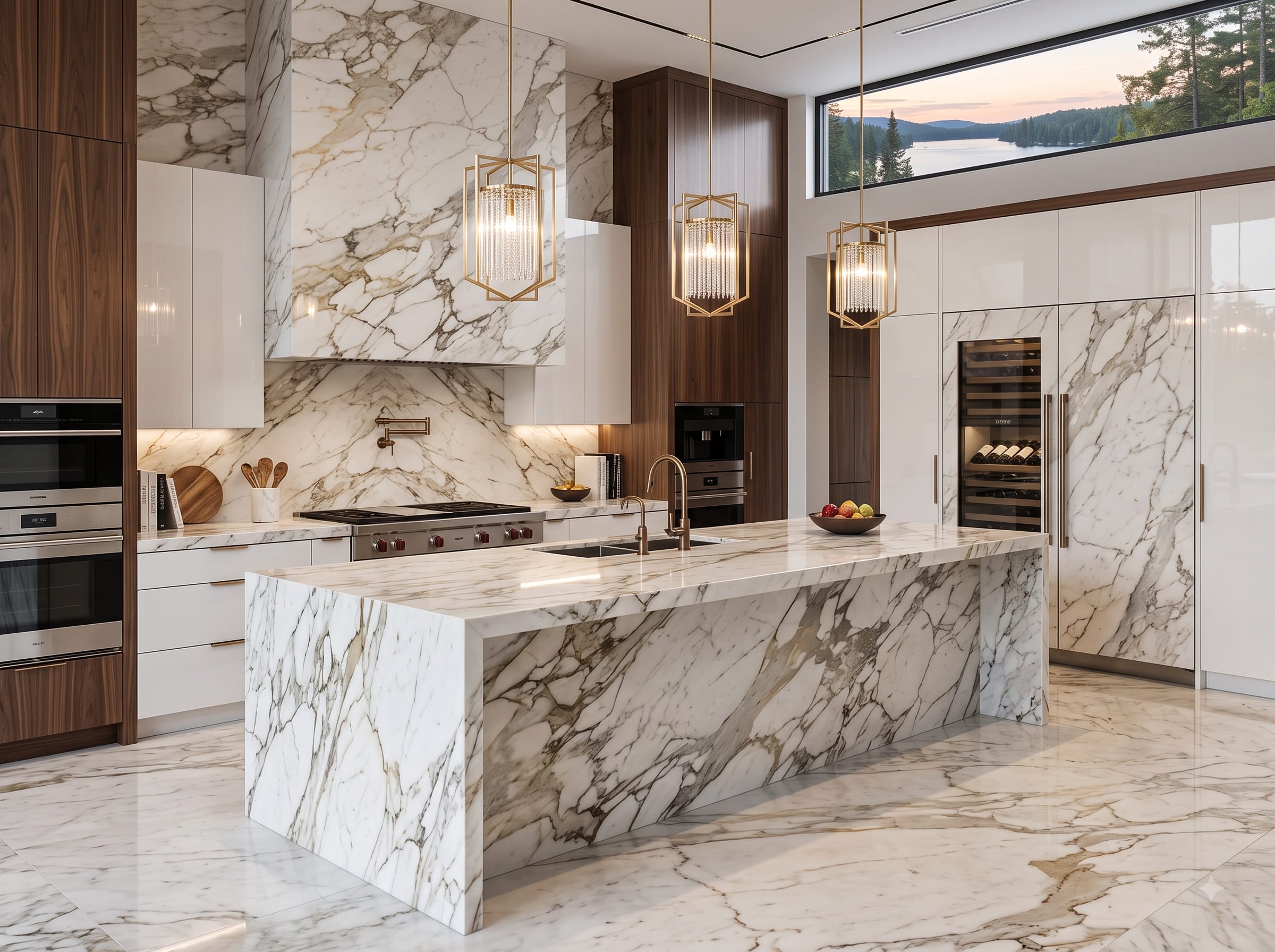
Materials
Quartz vs. Granite Countertops: Which Is Better for Your GTA Home?
Quartz and granite are the two most popular countertop materials for a reason — but they behave differently in daily use. Here's how they compare on appearance, durability, heat, staining, and upkeep.
"Quartz or granite" is one of the first questions almost every countertop project starts with, and it doesn't have a single right answer. Both are genuinely durable, widely used materials — the better fit depends on how your kitchen gets used day to day, not which one wins in the abstract.
Two different materials, one comparison
Granite is a natural stone, quarried in blocks and cut into slabs — no two slabs are exactly alike. Quartz is an engineered material, manufactured from crushed natural quartz bound with resin and pigment, which is what gives it a more uniform, repeatable appearance from slab to slab. Understanding that difference in origin explains most of the practical differences below.
Appearance and pattern
Granite's veining and mineral flecking are entirely natural, so every slab is genuinely unique — two granite islands cut from different blocks will never look identical. That one-of-a-kind quality is a big part of the appeal for homeowners who want a distinctive surface. Quartz's manufactured process produces a more consistent, repeatable pattern, which makes it easier to plan a design around a specific look or match across a large kitchen with confidence before the slab arrives.
- Choose granite if you want natural movement and a genuinely one-of-a-kind slab.
- Choose quartz if consistency across a large run of countertop matters, or you want to match samples confidently before fabrication.
Durability and everyday wear
Both materials hold up well under normal kitchen use. Granite is an extremely hard natural stone and resists scratching well, though small natural fissures — internal characteristics of the stone itself — are sometimes mistaken for damage. Quartz's resin content gives it a bit more flexibility, which can make it somewhat more resistant to chipping at thin edges, though quartz corners can still chip under a hard impact. Either material should be repaired by a stone professional rather than a DIY fix.
Heat resistance
Granite handles direct heat noticeably better than quartz. Quartz's resin binder makes it more sensitive to sustained high heat — a hot pan set directly on the surface can scorch or discolour it over time. Granite is far more heat-tolerant, though a trivet is still good practice for either material near a stovetop.
Staining and porosity
This is often where the comparison flips in quartz's favour. Quartz is non-porous, so it doesn't require sealing and resists staining from everyday spills — wine, coffee, oil, and citrus generally wipe away without soaking in. Granite is a natural, porous stone that benefits from periodic sealing to stay stain-resistant; exactly how often depends on the specific granite and sealer, which is worth asking your fabricator directly rather than assuming a fixed schedule.
Maintenance
Quartz's low-maintenance reputation comes directly from that non-porous surface — regular cleaning with a mild, non-abrasive cleaner is generally enough for daily upkeep. Granite asks for a little more attention over the years: periodic resealing, and avoiding harsh acidic cleaners that can dull a sealed surface over time. Neither is high-maintenance in absolute terms; the difference is one of degree.
If something gets damaged
Chips, cracks, and scratches can happen to either material over years of use. Natural stone like granite can often be honed or polished to reduce the appearance of surface damage — one advantage of a material that's stone all the way through. Quartz repairs depend more on colour-matching a resin fill to the surrounding slab. In both cases, this is a job for a stone professional, not a store-bought repair kit.
Which is the right fit for your kitchen?
Neither material is universally the better choice. A busy family kitchen with constant spills and little time for upkeep often leans toward quartz, for the lower-maintenance surface. A kitchen built around a specific natural-stone look, or where heat resistance near a range matters more than staining, often leans toward granite. Bringing both materials into the same conversation — ideally with real slab samples viewed in your kitchen's actual lighting — is the most reliable way to decide.
FAQs
Common questions.
Is quartz more expensive than granite?
Pricing varies by slab grade, colour, and project size for both materials, so there isn't a single answer that applies across the board. We can walk through current options for your specific project at a consultation.
Does granite need to be sealed every year?
Not necessarily — how often a granite countertop needs resealing depends on the specific stone and sealer used, not a fixed universal schedule. Ask your fabricator what's right for your slab.
Can quartz countertops crack?
Quartz is durable but not indestructible. Sustained heat, a hard impact on an edge, or an unsupported overhang under heavy weight can all cause damage, the same as with most solid-surface materials.
Which material is better for resale value?
Both quartz and granite are widely recognized, desirable countertop materials, and buyer preference varies by market and kitchen style. Either is a reasonable investment when properly fabricated and installed.
Related Services
Where this applies.
Related Reading
More from the Journal.
Start Your Project
Ready to plan your own project?
Request an estimate or book an on-site laser measurement — our team will respond as soon as possible.