
Planning & Design
How to Choose the Right Countertop for a Kitchen Renovation
Choosing a kitchen countertop means balancing how you live, how the space looks, and how the project comes together — cabinetry, lighting, edges, sinks, and seams all factor in before a single slab is cut.
A kitchen countertop is one of the few surfaces in a home that has to work hard functionally and look right for years. Getting there is less about picking a colour off a sample chip and more about a handful of decisions that build on each other.
Start with how you actually use the kitchen
Before comparing materials or colours, it helps to be honest about how the kitchen gets used. A household that cooks daily and preps a lot of food has different priorities than one built mainly for entertaining. Heavy daily use points toward a more forgiving, lower-maintenance surface; a kitchen used more for show can support a material that asks for a bit more care in exchange for a particular look.
Let the room's visual direction lead the material
Cabinetry colour and finish, flooring, and the overall style of the kitchen all narrow the field before you even look at individual slabs. A dark, high-contrast island reads very differently against white shaker cabinets than against a warm wood tone. It's worth settling on the room's overall direction first — light and airy, dramatic, warm and traditional — so the countertop supports the room instead of competing with it.

Lighting changes everything
The same slab can look noticeably different under warm incandescent light, cool LED task lighting, and daylight from a window. Whenever possible, view large samples — or better, the actual slab — in the kitchen's real lighting at different times of day, not just under a showroom's lighting.
Edge profile is a design decision, not an afterthought
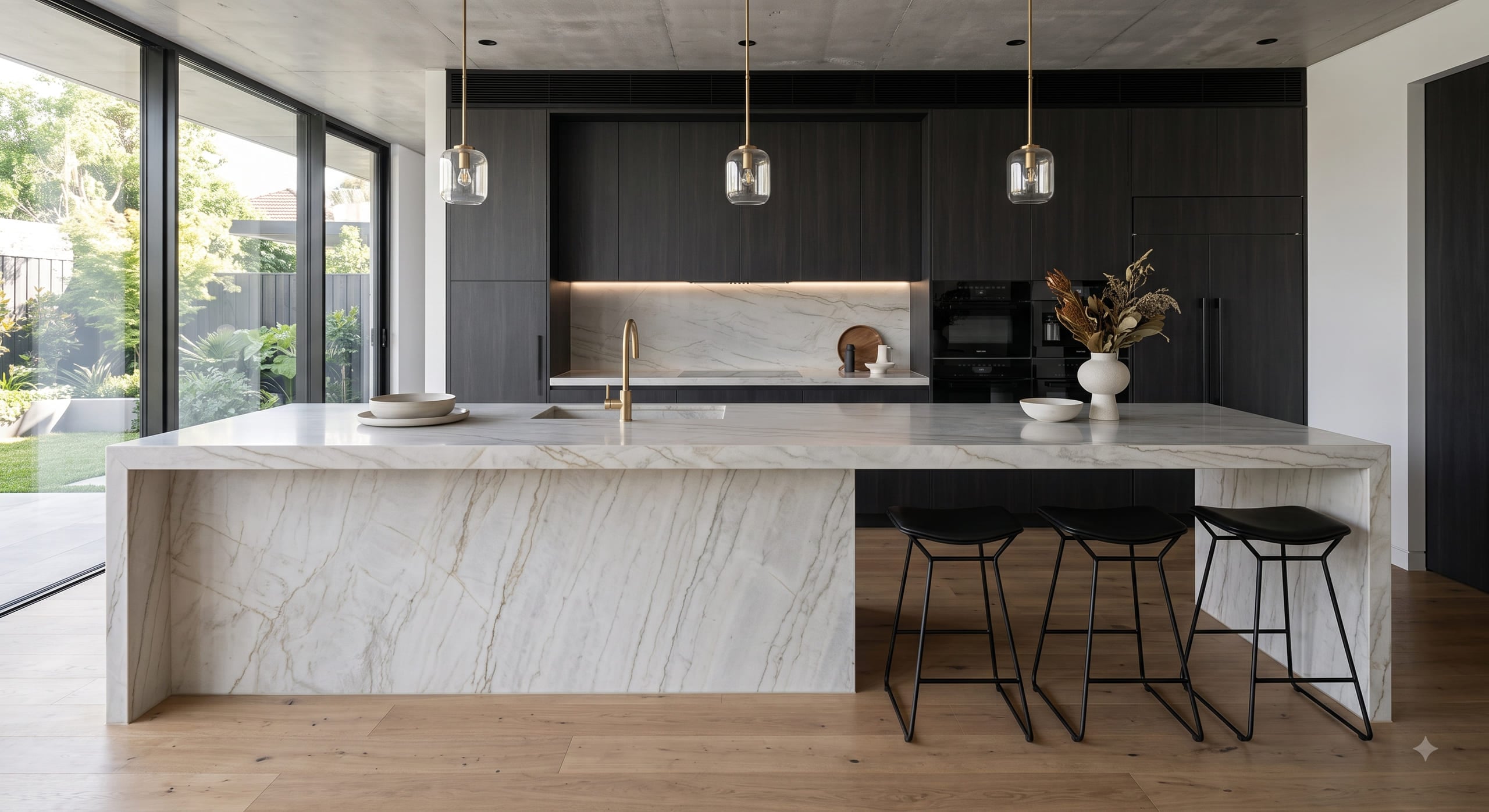
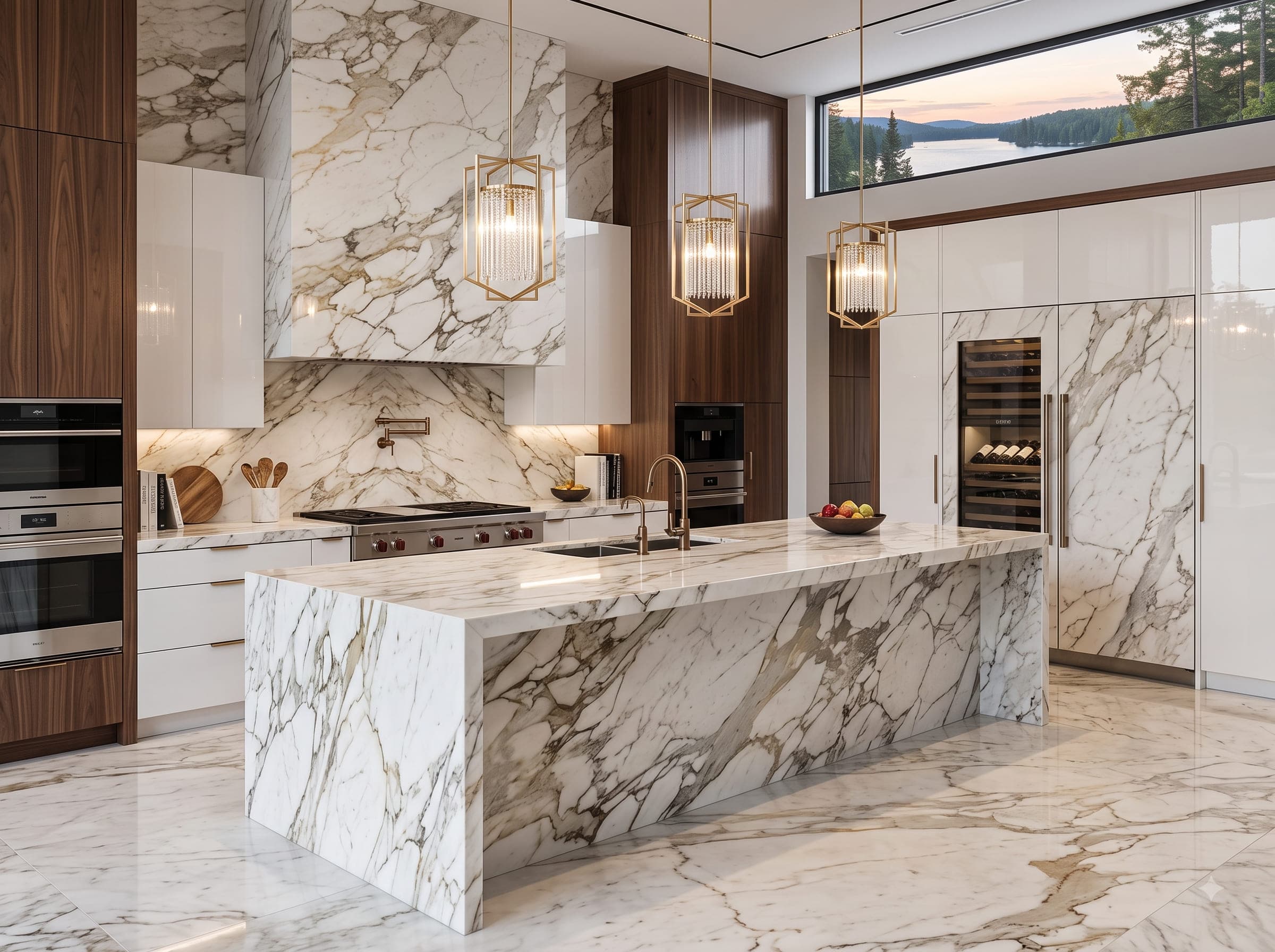
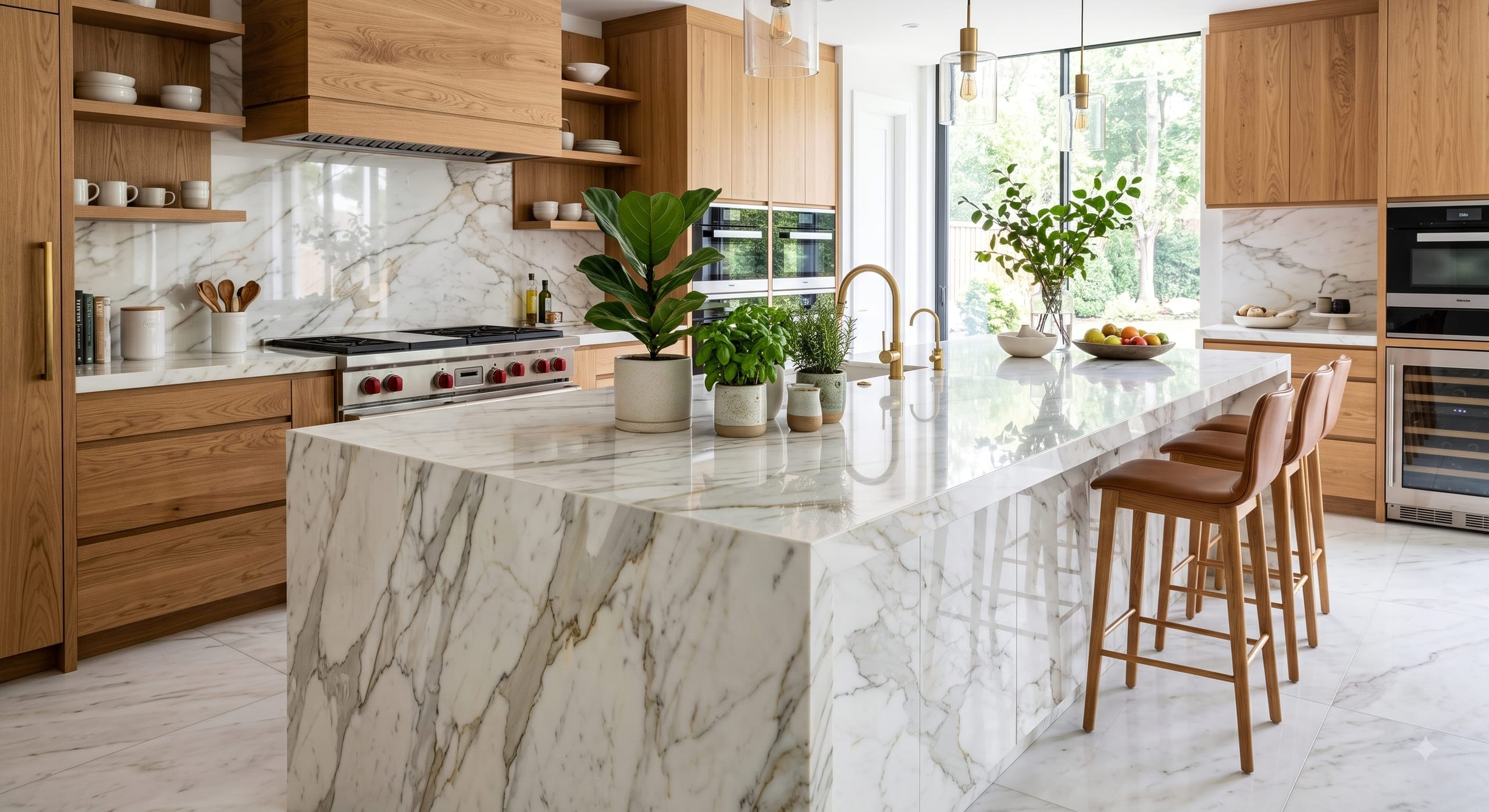
Waterfall edges, mitred returns, eased edges, and bullnose profiles all change how a countertop reads in a room. A waterfall edge that wraps down the side of an island reads as a single, continuous block of stone and tends to suit a more contemporary kitchen; a simple eased edge is a practical, classic choice for a busy family kitchen. Edge profile also affects how much material a project needs, so it's worth deciding early rather than after the slab is ordered.
Plan seams before you fall in love with a slab
Every stone slab has a maximum size, so a large island or a long run of countertop may need a seam. Where that seam falls — and how visible it is — is something a fabricator plans for during templating, positioning it in the least noticeable, most structurally sound spot. Ask to see where seams are planned before fabrication begins.
Sinks and cutouts
Undermount, drop-in, and farmhouse sinks each interact with a stone countertop differently, and the choice affects the cutout, the edge treatment around the sink, and sometimes the overall layout. Deciding on sink style before templating means the cutout can be positioned from your actual fixture rather than a generic size.
See the actual slab before it's cut
For natural stone especially, no two slabs are identical — photos and small samples only tell part of the story. Viewing the full slab, or at minimum a large-format sample, before fabrication is the best way to confirm veining, colour, and any natural characteristics you'll be living with for years.
Measure twice — literally
Accurate measurements are what make a custom countertop fit correctly the first time. Most fabricators, including our own process, use digital laser templating to capture a kitchen's exact dimensions after cabinetry is installed, rather than relying on paper measurements alone — worth understanding before your project starts. Our guide to how laser templating works covers this step in more detail.
Budget planning, without guesswork
Countertop cost depends on material, slab size, edge profile, and the complexity of cutouts and seams — enough variables that a reliable number only comes from an actual quote against your specific kitchen. Rather than estimating from a general price range, it's worth requesting a real estimate early in the planning process so budget and material choice can move together.
FAQs
Common questions.
Should I choose the countertop before or after my cabinets?
Cabinets first, generally — cabinet layout and finish narrow the countertop options, and templating happens after cabinetry is installed so measurements reflect the real space.
How long does the process take from selection to installation?
Timelines depend on material availability and project scope. We can give you a schedule specific to your project once we understand the full scope.
Can I see the exact slab before it's fabricated?
Yes — for natural stone especially, we recommend viewing the actual slab, not just a sample, since veining and colour vary from slab to slab.
What's the difference between a sample and the real slab?
A sample shows the general colour and pattern of a material, but with natural stone, the full slab can vary meaningfully from a small cut sample — which is why a slab viewing matters for natural materials in particular.
Related Services
Where this applies.
Related Reading
More from the Journal.

Start Your Project
Ready to plan your own project?
Request an estimate or book an on-site laser measurement — our team will respond as soon as possible.