
Design
Full-Slab Feature Walls: Design, Vein Matching and Installation
A full-slab feature wall turns natural stone into the centrepiece of a room. Here's how material selection, bookmatching, and installation planning come together — from an accent wall to a fireplace surround.
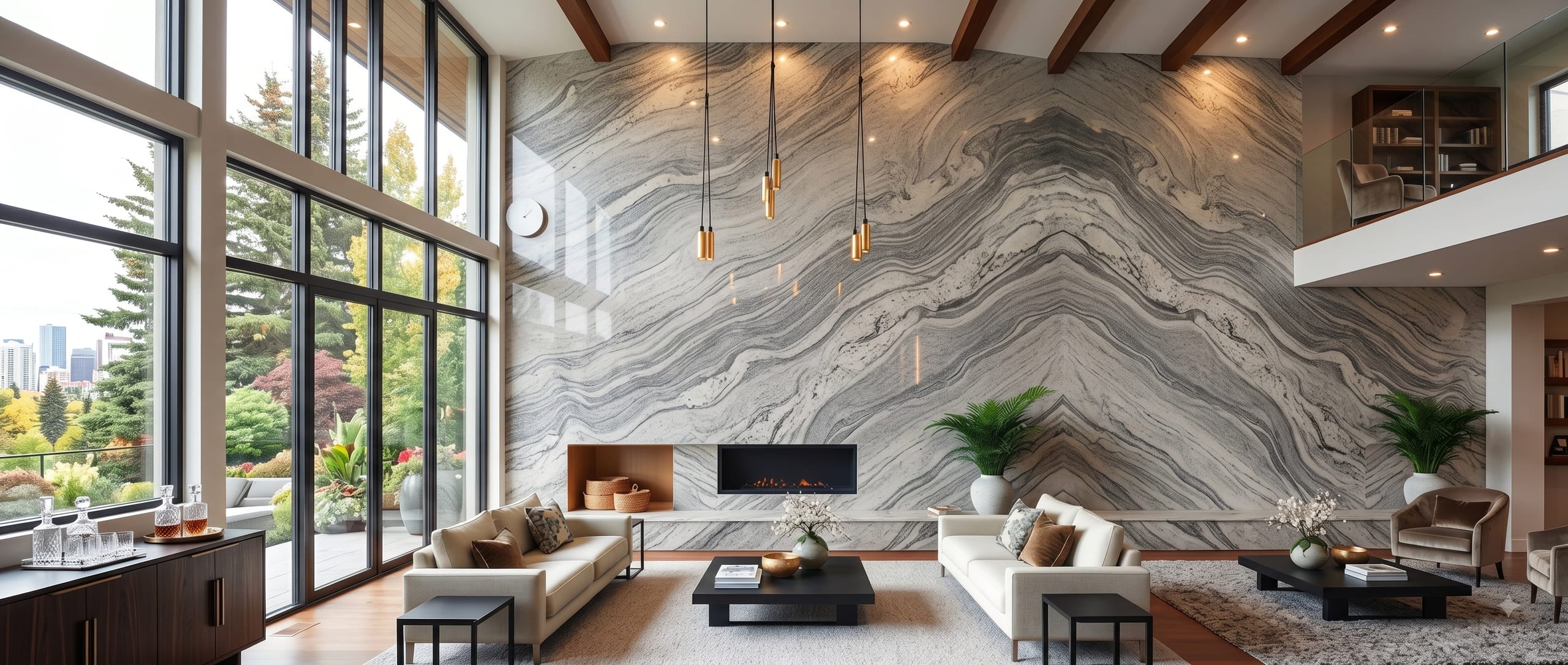
A full-slab feature wall uses natural stone the way a sculptor uses a single block — as the entire visual statement of a room, not just a finish. Getting there well depends on decisions made long before installation day.
What makes a feature wall different from a countertop project
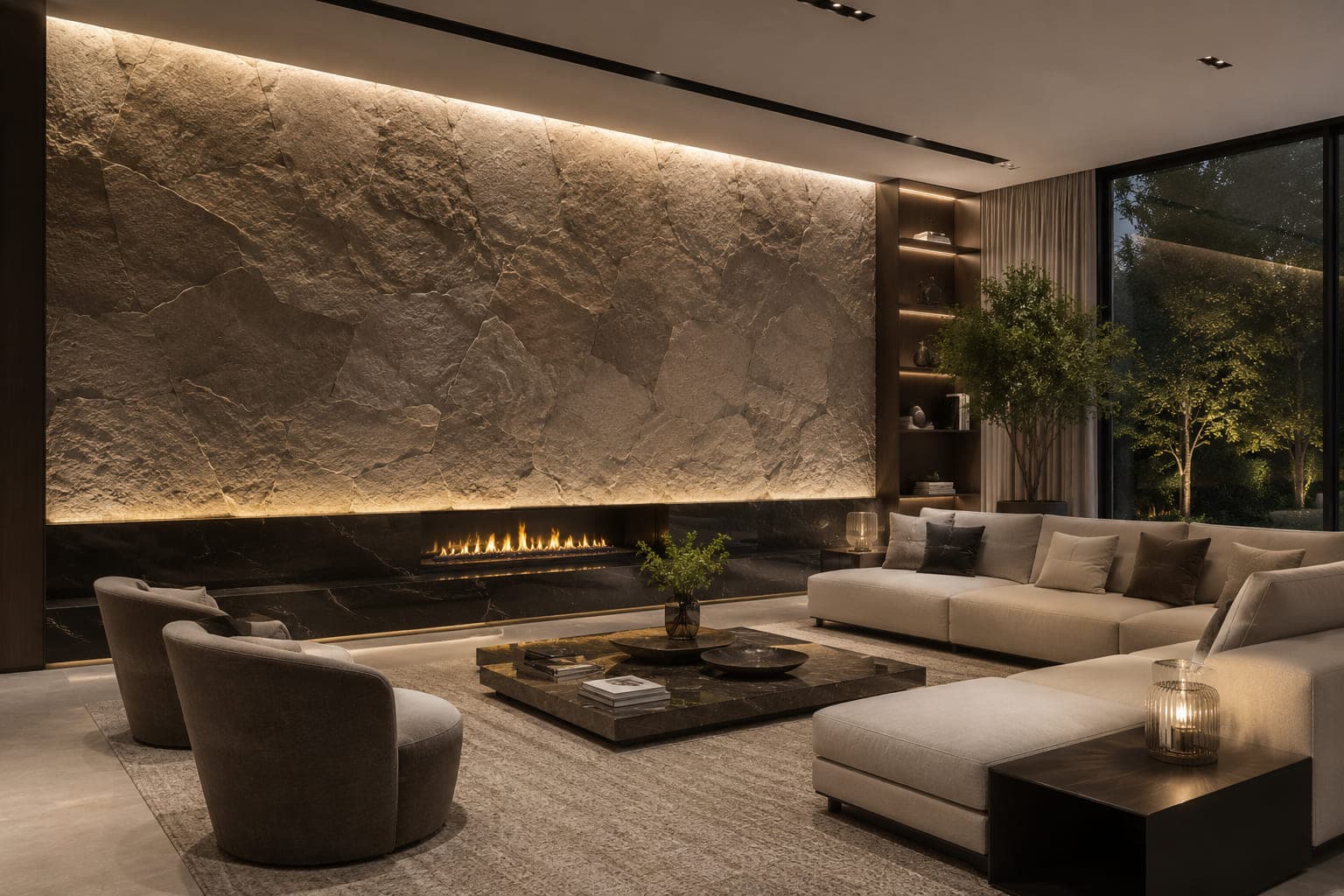
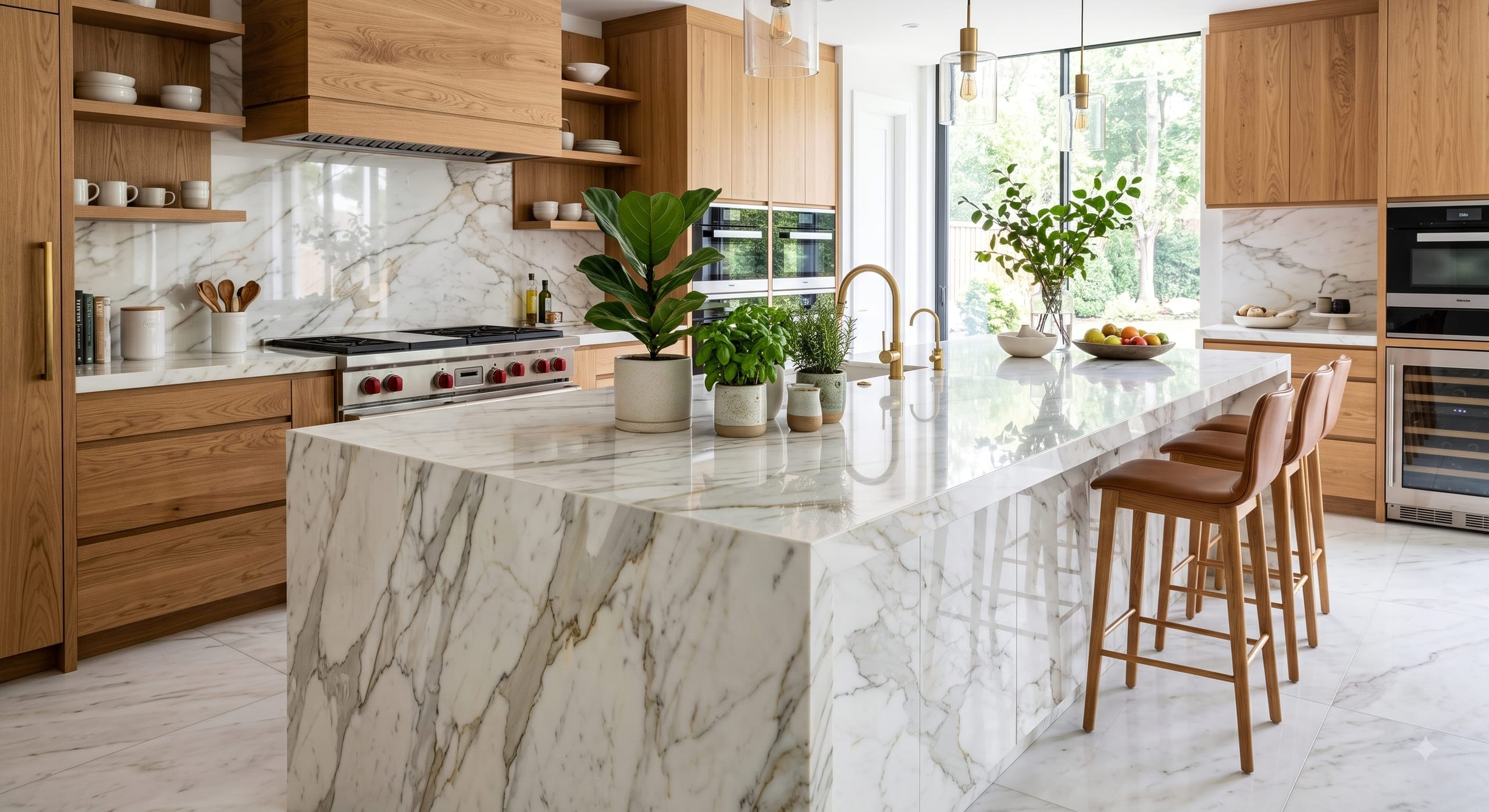
A full-slab feature wall uses large-format stone panels — often the same slabs used for countertops — as wall cladding rather than a horizontal surface. Because the wall itself becomes the visual focus of the room, layout decisions (which panel goes where, and how the veining lines up) matter as much as the material choice itself.
Choosing a material for visual impact
Materials with strong, dramatic natural veining — like marble and quartzite — tend to be the most popular choices for feature walls, because that movement is exactly what a large, uninterrupted stone surface is built to showcase. More uniform materials, like engineered quartz or sintered stone, are also used where a cleaner, more consistent look is the goal rather than dramatic natural variation.
Bookmatching, explained
Bookmatching is the technique of cutting two adjoining panels from consecutive slices of the same block, then flipping one so the veining mirrors across the seam — like the two pages of an open book. The result is a symmetrical pattern that reads as intentional and continuous, rather than two separate, unrelated pieces of stone placed side by side. Bookmatching is planned digitally before fabrication, so the mirrored pattern can be confirmed before any material is cut.
Planning the layout before anything is cut
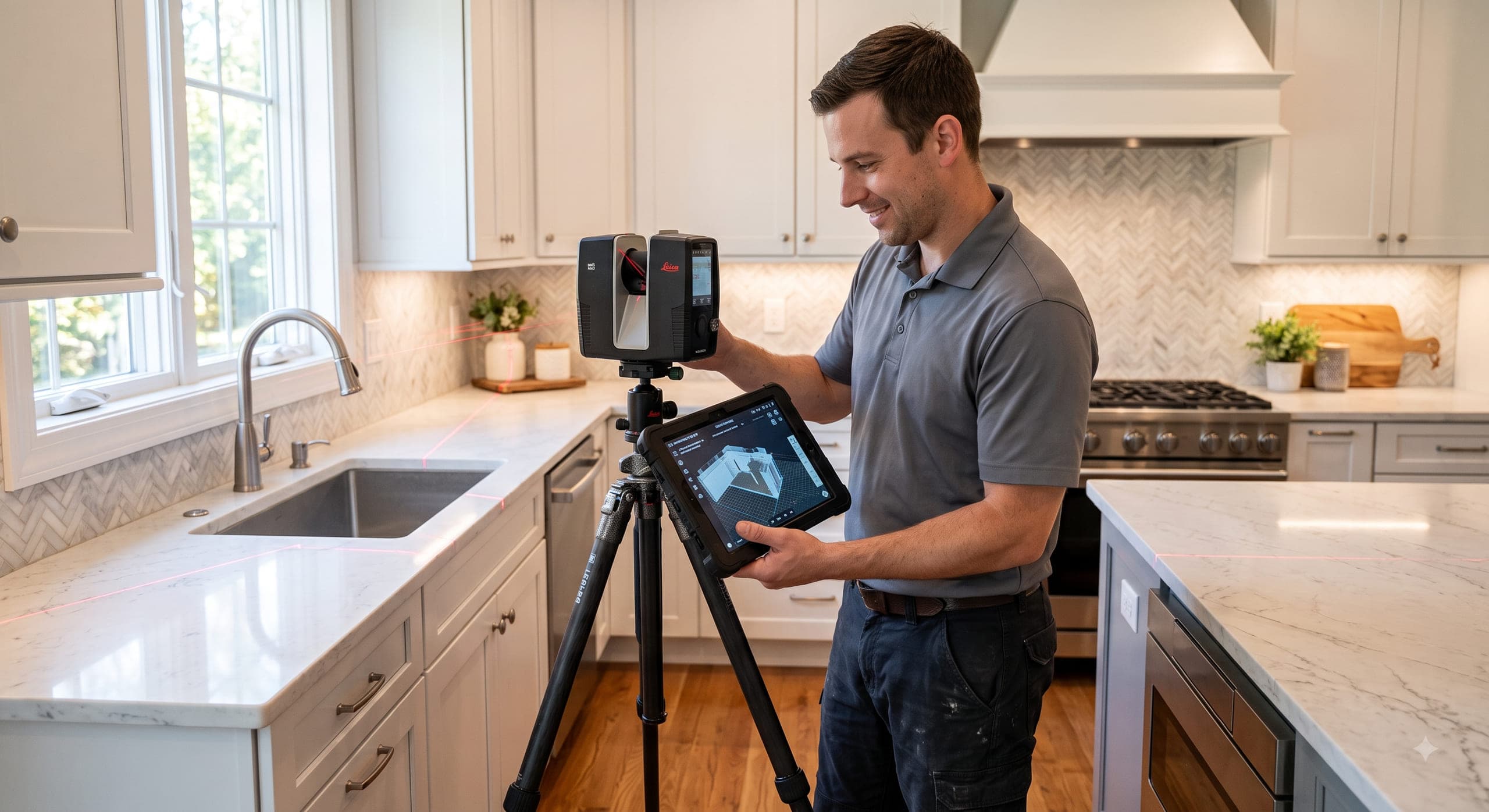
Panel size and wall dimensions determine how many pieces a feature wall needs — fewer, larger panels generally mean fewer seams, which affects both the finished look and how the project is planned. This is worked out digitally against the actual wall, captured through templating, so the pattern, seam positions, and panel orientation are confirmed before fabrication begins, not adjusted on installation day.
Fireplace surrounds specifically
A stone fireplace surround has its own considerations beyond a flat accent wall — most importantly, the manufacturer-specified clearance around the fireplace unit for heat safety. Templating captures the exact opening and required clearances, so the surrounding stone is cut with the correct heat-safe gap built into the design rather than estimated on site.
Transitions and edges
Where a feature wall meets a ceiling, floor, or adjoining wall — and how those transitions are finished — affects how seamless the final result feels. These transition points are part of the same planning process as the bookmatching layout, so the wall reads as one considered composition rather than a slab that was installed and trimmed to fit.
Lighting
Because feature walls rely on veining and texture for their visual impact, lighting placement matters. Wash lighting from above or the side can accentuate natural movement in the stone, while flat overhead lighting alone can mute it. It's worth discussing lighting plans alongside the stone layout, ideally before installation, rather than as a separate decision made later.
Substrate preparation and installation
Large-format stone panels are heavy, and the wall or substrate behind them needs to be properly prepared to support that weight securely. This is addressed as part of planning and installation, coordinated with the rest of the room's construction schedule where the feature wall is part of a larger renovation.
FAQs
Common questions.
How many panels does a typical feature wall need?
It depends on the wall's height and width relative to available slab sizes — we work this out during templating and layout planning for your specific wall.
Can a feature wall be built around an existing fireplace?
Yes. The fireplace opening and surrounding wall are templated directly, and the surround is cut to the unit's required clearances.
What materials show bookmatching best?
Materials with strong, natural veining — like marble and quartzite — tend to show bookmatching most dramatically, since the mirrored pattern relies on visible natural movement in the stone.
Is a feature wall heavier than a standard wall finish?
Full-slab stone panels are significantly heavier than typical wall finishes like tile or paint, which is why substrate preparation is part of planning the installation.
Related Services
Where this applies.
Related Reading
More from the Journal.
Start Your Project
Ready to plan your own project?
Request an estimate or book an on-site laser measurement — our team will respond as soon as possible.